
A simple stretching routine for busy days takes just ten minutes: five gentle stretches in the morning to wake your body up, and five in the evening to release the stiffness of the day. You do not need special equipment, a lot of space, or flexibility to begin. You need a small, repeatable sequence that you can do in your living room, and a habit that sticks even on hectic days.
Most of us spend long hours sitting, standing in one place, or repeating the same movements, and our bodies let us know about it: tight shoulders, a stiff neck, achy hips, and a lower back that complains when we stand up. Gentle stretching helps by moving your joints through their range, warming up your muscles, and giving you a few quiet minutes to notice how your body feels. It is not a workout, and it is not a test. It is a daily reset, and even a short one can make the rest of the day feel easier.
This guide gives you a complete ten-minute routine, shows you how to fit it into a busy schedule, and explains how to build the habit so it survives real life. Move slowly, breathe normally, and never force a stretch into pain. A gentle pull is enough. If a movement hurts, skip it or make it smaller, and if you have an injury or a health condition that affects movement, check with a qualified professional before starting a new routine.
The Morning Five: Wake Your Body Up
Do these five stretches soon after you get up, in any order. Hold each one for about thirty seconds, breathing slowly, and repeat each side where needed. The whole set takes about five minutes.
First, the neck release. Sit or stand tall, drop your right ear toward your right shoulder, and let your left shoulder relax downward. Hold, breathe, and repeat on the other side. This is the stretch busy people need most, because hours of looking at screens tend to tighten the neck and upper shoulders.
Second, the shoulder roll. Lift your shoulders up toward your ears, roll them back and down in a slow circle, and repeat ten times. Then reverse the direction for ten more. Shoulder rolls are gentle, they can be done anywhere, and they are a good way to shake off the stiffness of sleep.
Third, the standing side stretch. Stand with your feet hip-width apart, reach both arms overhead, and lean gently to the right, feeling a stretch along your left side. Return to the middle and lean left. This opens up the sides of your body, which rarely get stretched during a normal day.
Fourth, the gentle forward fold. Stand with your feet hip-width apart, bend your knees slightly, and let your upper body hang forward toward the floor, with your arms relaxed. Let your head hang heavy, sway gently side to side if that feels good, and roll slowly back up to standing. This stretch eases the back of the legs and the lower back, and it is a calm way to start the day.
Fifth, the hip opener. Stand beside a chair or wall for balance, lift one knee, and make five slow circles with that knee, first in one direction and then the other. Repeat on the other side. Hips tighten from sitting, so even a minute of hip circles can make walking and standing feel freer for the rest of the day.
The Evening Five: Release the Day
In the evening, your goal changes. Instead of waking up, you are winding down, so choose slower, floor-based stretches and hold each one a little longer, about forty-five seconds.
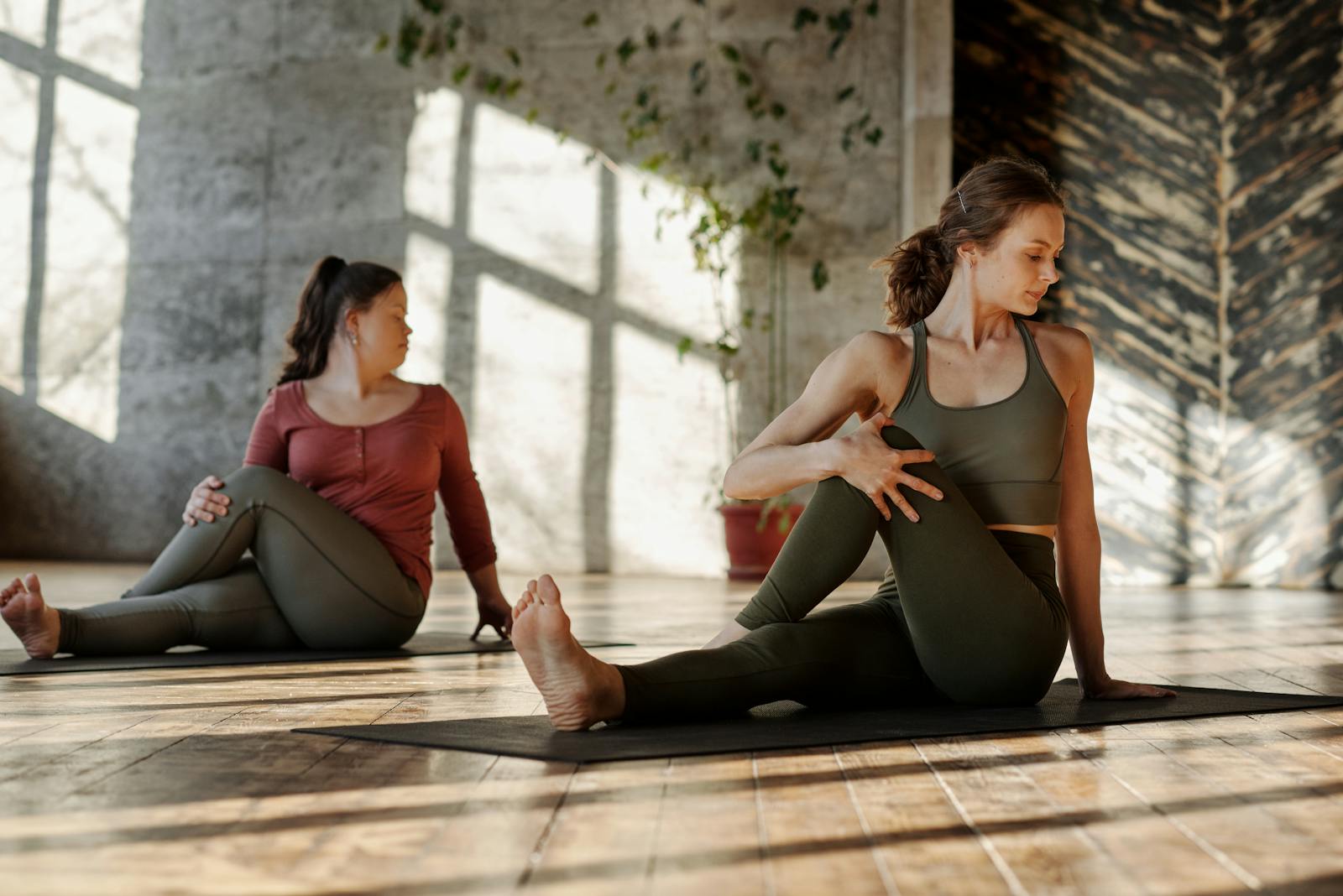
Start with a seated spinal twist. Sit on the floor or in a chair, place your right hand behind you, and gently turn your upper body to the right, looking over your shoulder. Hold, breathe, and repeat on the left. Twists feel wonderful after a day of sitting in one position, because they move the spine in a direction it rarely goes.
Next, the hamstring stretch. Sit with one leg straight out in front of you and the other foot tucked against your inner thigh. Hinge forward from your hips with a straight back, reaching toward your foot only as far as feels comfortable. Switch legs. You do not need to touch your toes. The stretch works just as well with a gentle reach.
Then the chest opener. Stand in a doorway, place your forearms on the frame, and step gently forward until you feel a stretch across your chest and the fronts of your shoulders. Desk work and phone use tend to round the shoulders forward, so opening the chest in the evening helps balance the whole day.
Finish with a child's pose and a deep breath. Kneel, sit back toward your heels, stretch your arms forward on the floor, and rest your forehead down. Stay here for a full minute, breathing slowly. It is a quiet end to the routine, and it pairs beautifully with a calm evening, like the one in our guide to a simple evening reset routine for weeknights.
How to Fit Stretching Into a Busy Day
The best routine is the one you actually do, so attach stretching to something you already do every day. Stretch while the kettle boils, after you brush your teeth, or during the first quiet minutes after work. This trick, called habit stacking, works because the existing habit reminds you, and you do not have to rely on willpower or memory alone.
If ten minutes feels like too much at first, start with five. Do the morning set one day and the evening set the next, or split the routine into two-minute pieces across the day: neck and shoulders at your desk, hips while waiting for dinner, and a forward fold before bed. Short pieces still count, and they build the habit that later grows into the full routine. The same small-steps idea works for other healthy habits too, as we explain in our guide to starting a walking habit you actually enjoy and keep.
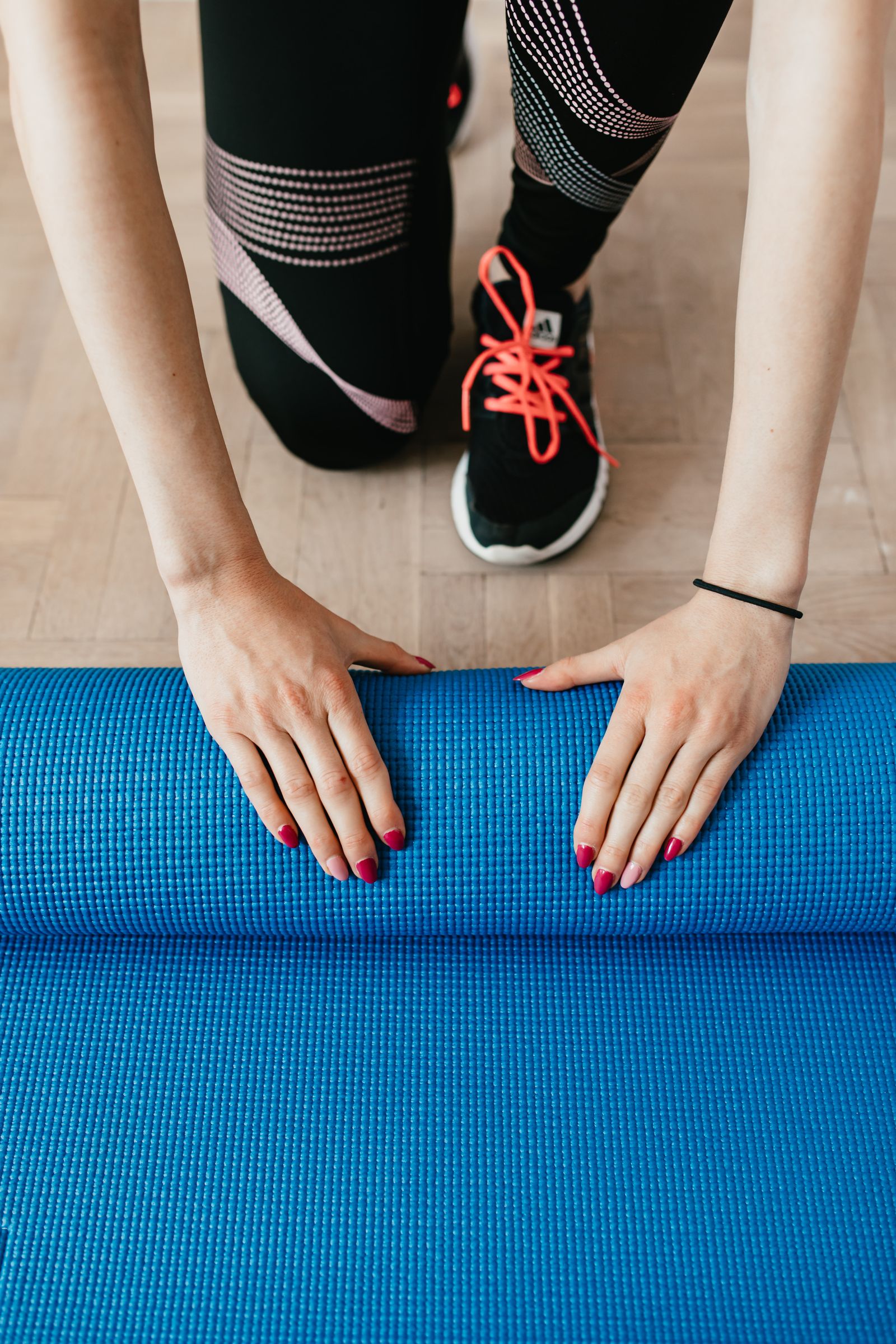
Keep your stretching spot ready. A clear corner of floor, a mat or towel left out, and comfortable clothes you can move in remove the friction that kills good intentions. If your living space is tight, our guide to small-space living ideas that make a tiny home work shows how a small corner can still serve a real purpose, and a calm, comfortable room makes any routine easier to keep, as we describe in our guide to creating a cozy bedroom for better sleep.
Building the Habit So It Sticks
Start small and stay consistent. Commit to five minutes a day for two weeks before you try to extend the routine. Mark each day on a calendar or in a journal, because a visible streak is a surprisingly strong motivator, and writing about how your body feels can turn a chore into a habit you notice and value, much like the practice in our guide to starting a simple journaling habit and actually keeping it.
Expect missed days, and plan for them. A missed day is not a failure, and it does not cancel the days you did stretch. The rule that works for most people is simple: never miss twice. If you skip Monday, stretch on Tuesday, even if it is only for two minutes. This forgiving rule keeps a small slip from turning into a full stop.
Make it pleasant. Put on music you like, open a window for fresh air, or stretch outside when the weather is kind. If you share your home with others, invite them to join you for the evening set. A routine that feels good is a routine you return to, and a few minutes of shared calm at the end of the day is a gift for everyone involved.
A Note on Safety
Stretching should feel like a gentle pull, never sharp pain. Move slowly into each position, keep breathing, and avoid bouncing or forcing your body further than it wants to go. Warm muscles stretch more comfortably than cold ones, so on chilly mornings, walk around the house for a minute or two before you begin. If you have an injury, a chronic condition, or pain that does not improve, talk to a qualified health professional before continuing, and skip any movement that does not feel right for your body.
Frequently Asked Questions
How often should I stretch?
Daily is ideal, but even three or four days a week makes a real difference. The routine in this guide is designed for every day because it is short and gentle, but a shorter version done regularly beats a long version done rarely. Consistency matters more than perfection.
Is it better to stretch in the morning or the evening?
Both have benefits, which is why this guide includes both. Morning stretches wake your body up and loosen overnight stiffness, while evening stretches release the tension of the day and help you wind down. If you only have time for one, choose the time you are most likely to stick with.
Do I need to be flexible to start stretching?
No. Flexibility is the result of stretching, not a requirement for it. Every stretch in this guide can be made smaller: bend your knees more, reach less far, or hold for less time. Your body will gradually open up with practice, and comparing yourself to others is the fastest way to ruin a good habit.
Can stretching replace exercise?
Stretching is a wonderful complement to movement, but it is not a replacement for it. Walking, dancing, gardening, and other activities keep your heart and muscles strong, while stretching keeps you mobile and comfortable. Together, they make a balanced daily routine, and a relaxing weekend plan, like the one in our guide to planning a relaxing weekend at home, is a great place to enjoy both. A weekly reset, like the one in our guide to a simple weekly reset for starting Monday feeling ready, can also be the moment you check in on how the habit is going and adjust it for the week ahead.
Ten minutes a day is a small investment for a body that moves more freely and a mind that gets a quiet pause twice a day. Start tonight with the evening five, notice how you feel tomorrow morning, and let that feeling carry you into the morning five. Small, gentle, and regular: that is the whole secret.



0 Comments
Play nice — spam and promo links are deleted.