
Fall is the best season for gathering — and the easiest season to overcomplicate it. The pumpkins are out, the light turns golden, and suddenly a simple dinner with friends feels like it should involve a themed menu, a decorated porch, and a house that looks like a magazine. It does not. The gatherings people remember are rarely the most elaborate ones. They are the warm ones: good food, an easy atmosphere, and a host who is actually present instead of stuck in the kitchen. Hosting a simple fall gathering without stress is mostly a matter of deciding what not to do.
The short answer
A stress-free fall gathering comes down to a few choices: keep the guest list small, pick one simple centerpiece dish and let everything else be easy, set a clear start and end time, decorate with what the season already gives you for free, and do as much as possible the day before. Accept help when it is offered. And remember the real goal: people came to see you, not to inspect your home.
Keep the guest list small
The single biggest stress reducer is a smaller guest list. Six to eight people is the sweet spot for a home gathering: conversation flows, everyone can sit together, and the cooking stays manageable. Beyond ten, you need more food, more seating, more planning, and more cleanup — and the host spends the evening managing logistics instead of enjoying friends. If your circle is large, host twice for smaller groups rather than once for a crowd. Two relaxed evenings beat one frantic one.
Invite clearly and early: a message with the date, time, what to expect, and whether people should bring anything. "Come for soup and dessert, Saturday at 6, no need to bring anything but yourself" removes all the guesswork that makes guests anxious too. A clear end time — "until about 9" — is a kindness to everyone, including you.
Build the menu around one star dish
Choose one dish that does the heavy lifting — a slow-cooker stew, a roast chicken, a big pot of chili, a tray of baked pasta — and make everything else simple. Bread from a good bakery, a bagged salad dressed at the last minute, a cheese board, and one dessert you can make ahead (apple crisp, pumpkin bars, or a store-bought pie nobody will judge you for). A menu with one star and easy supporting players tastes generous without chaining you to the stove.
Cook what you can the day before. Soups and stews genuinely taste better the next day, desserts hold up fine, and a table set the night before means the day of the gathering is about finishing touches, not a marathon. If you want a drink that feels seasonal without effort, a big batch of mulled cider on the stove — or a simple apple cider spritz — serves itself and makes the house smell wonderful. Keep a vegetarian option in mind without making a second menu: a hearty soup or a grain-based side often covers everyone.
Decorate with the season, not the store
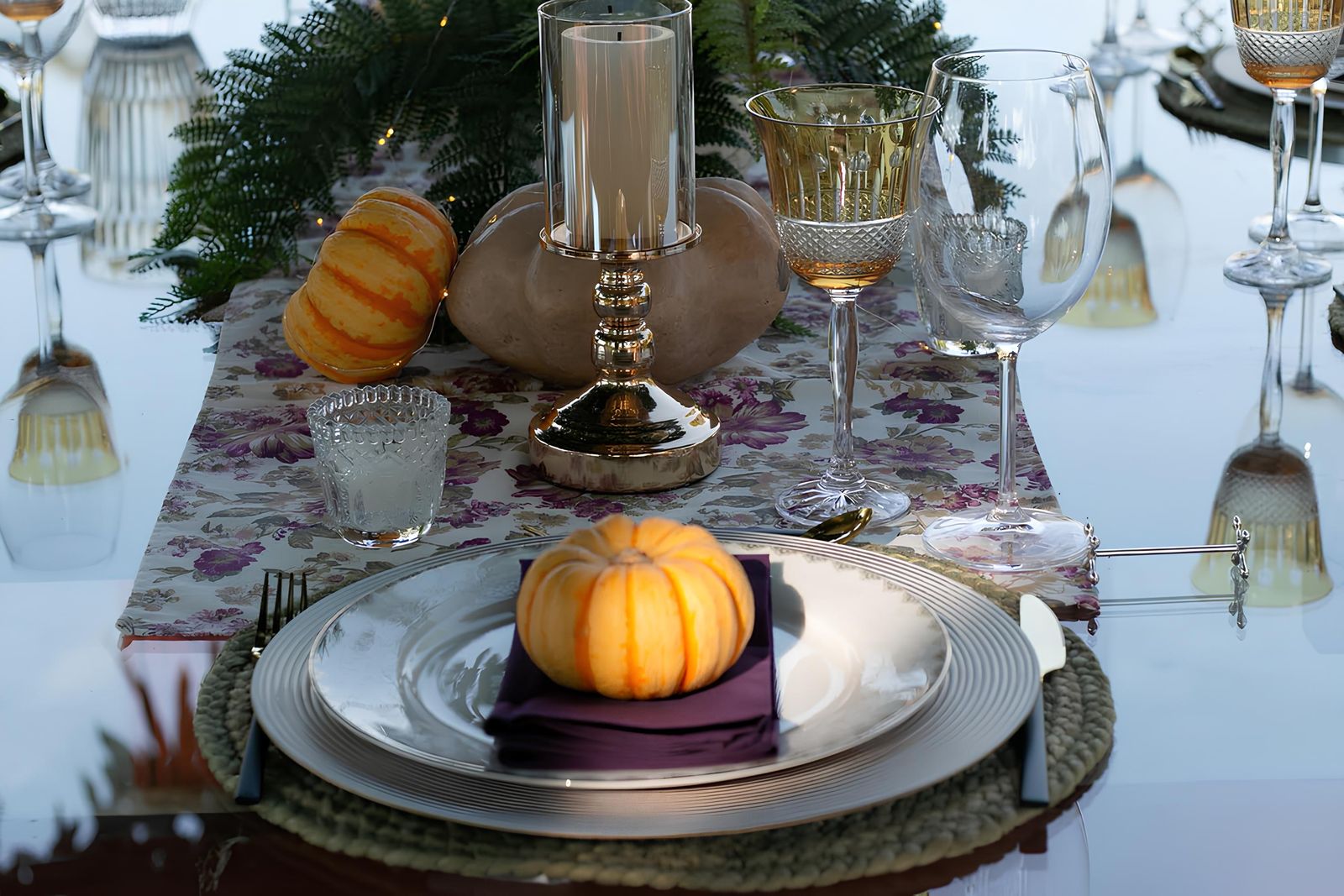
Fall gives you free decorations: pumpkins and gourds, coloured leaves, pinecones, branches, candles. A few pumpkins on the porch, a bowl of leaves or pinecones on the table, and candlelight in the evening will do more for atmosphere than a cart full of themed items. If your home already feels cozy this season, lean on that — warm throws on the sofa, soft lighting instead of overhead lights, a playlist of mellow music playing low. For more budget-friendly cozy ideas, see budget-friendly ways to make your home feel cozy this fall.
One practical tip: light the candles and start the music before the first guest arrives. Atmosphere is set in the first five minutes, and a home that already smells good and sounds warm puts everyone — including the host — at ease immediately.
Accept help — and plan the flow
When someone asks "Can I bring anything?", say yes. Assign specific things: a salad, a dessert, a bottle, ice. People like contributing, and it genuinely reduces your load. A potluck-style gathering is also a perfectly good option — "I'll make the main dish, bring a side or dessert to share" — and nobody thinks less of a host for it. The old rule that the host must do everything is a recipe for a host who never hosts again.
Think about flow, not just food. Where will people put coats? Is there a drink station so you are not pouring all evening? Can guests serve themselves buffet-style, freeing you from plating? A self-serve setup — food on the counter, plates stacked, drinks in one spot — means guests help themselves and you stay in the conversation. If the weather allows, a short walk after dinner or a fire pit outside extends the evening without any extra hosting effort.
The day-of timeline that keeps you calm
Here is a low-stress timeline: the day before, cook the main dish, make dessert, set the table, and tidy the main rooms. On the day, give yourself a two-hour window before guests arrive: first hour for finishing food and setting out drinks, second hour for a shower, getting dressed, lighting candles, and starting music. Build in thirty minutes of doing nothing before the doorbell rings. A host who has sat down with a cup of tea before guests arrive is a different host from one who is still vacuuming when they knock.
During the gathering, resist the urge to fuss. If the food is out and the drinks are flowing, your job is done. Top up glasses, enjoy the conversation, and let the small imperfections go — nobody remembers whether the napkins matched, but everyone remembers whether the host was relaxed and happy to see them.
Make it work for kids and mixed diets
If children are coming, plan for them rather than hoping they entertain themselves: a simple activity like decorating small pumpkins, a colouring corner, or a short outdoor game keeps them happy and keeps the adults' conversation intact. Serve one kid-friendly option you know they will eat — plain pasta, bread and cheese, or a mild soup — and do not worry about a separate children's menu. For mixed diets, label dishes simply ("contains nuts", "vegetarian") with small cards or a quick word when you set the food out. Most dietary needs are covered by a menu that already has a grain, a vegetable, and a protein as separate items rather than everything mixed into one dish.
Timing matters with kids too: an earlier start, like 5 or 5:30 p.m., means families can leave before bedtime meltdowns, and the evening still feels complete. A gathering that respects bedtimes is a gathering families will come back to.
Cleanup without the dread
Cleanup is where many hosts regret the whole evening, so plan it too. Before guests arrive, empty the dishwasher and clear a counter for dirty dishes, so cleanup has somewhere to go. As the evening winds down, start quietly: stack plates, pack leftovers into containers guests can take home (people love leaving with soup), and load the dishwasher. If friends offer to help, let them — washing up together is often the best conversation of the night.
The next morning, give yourself twenty minutes to finish: wipe surfaces, take out trash, put decorations away. Do not try to restore the house to perfection the same night. A good gathering ends when the host is tired but happy, not when the kitchen is spotless.

Frequently asked questions
How much food should I make?
Plan one generous main dish plus two or three simple sides, and assume people eat a little less than you fear. It is better to have one extra loaf of bread on standby than to cook a second main dish nobody needs.
What if my home is small?
Small homes host beautifully — they feel warm and intimate by default. Keep the guest list small, serve buffet-style, and use the kitchen counter as the serving table. Guests will not notice the size; they will notice the warmth.
Should I ask guests to bring something?
Yes, when they offer. Give them something specific and easy. If you prefer to provide everything, say so clearly in the invitation so guests do not arrive anxious and empty-handed.
What if something goes wrong — burnt food, a spill, a late guest?
It will, eventually, and it will not matter. Order a pizza, laugh about the spill, start without the late guest. The measure of a gathering is the company, not the execution.
The bottom line
A simple fall gathering is not a performance — it is an invitation. Keep the list small, build the menu around one star dish, decorate with the season itself, accept help, and protect your own calm with a day-before plan. Then be present with your people. More lifestyle ideas are on the Life Blogs homepage. The best gatherings are the ones where the host enjoyed the evening too — and those are the ones guests ask to repeat.



0 Comments
Play nice — spam and promo links are deleted.